Recording data
1. Start recording
-
Check the requirements for mobile devices and recording.
-
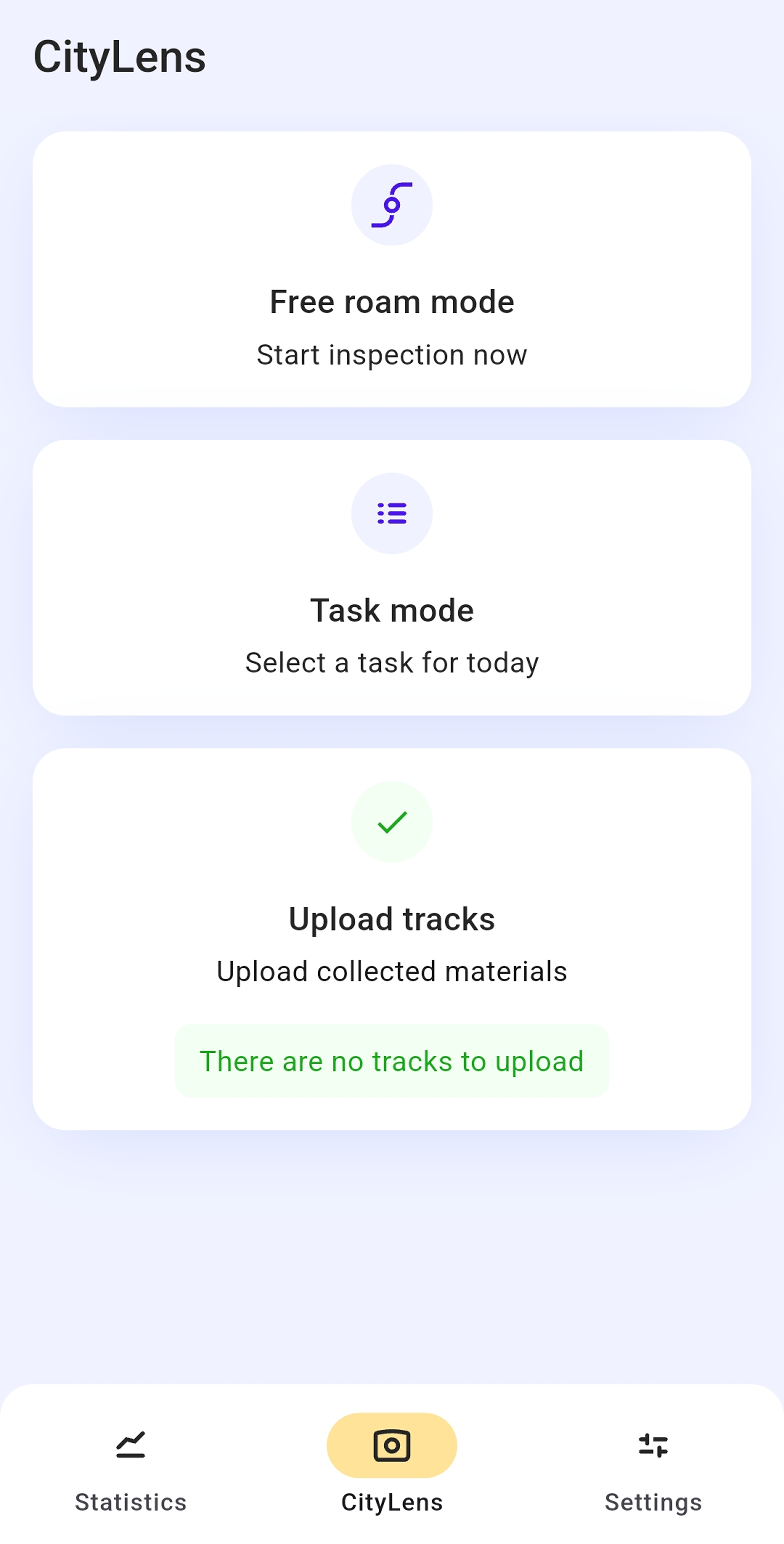
Go to the CityLens tab and select one of the data recording modes:
-
Free roam mode: driving an area without a specified route. In this mode, you can take photos or record videos. Internet connection is not required for data recording.
-
Task mode: completing a task from the Task Planner. If the administrator assigns you a task to cover an area, you can select it in the mobile application and use the built-in navigator to move along the required route. You can download tasks in advance and work with them without an internet connection.
-
-
Follow the instructions on working in the free roam mode or the task mode.
Free roam mode
Recording data
Recorded data is stored locally. If necessary, you can temporarily export tracks to an external storage device during recording.
-
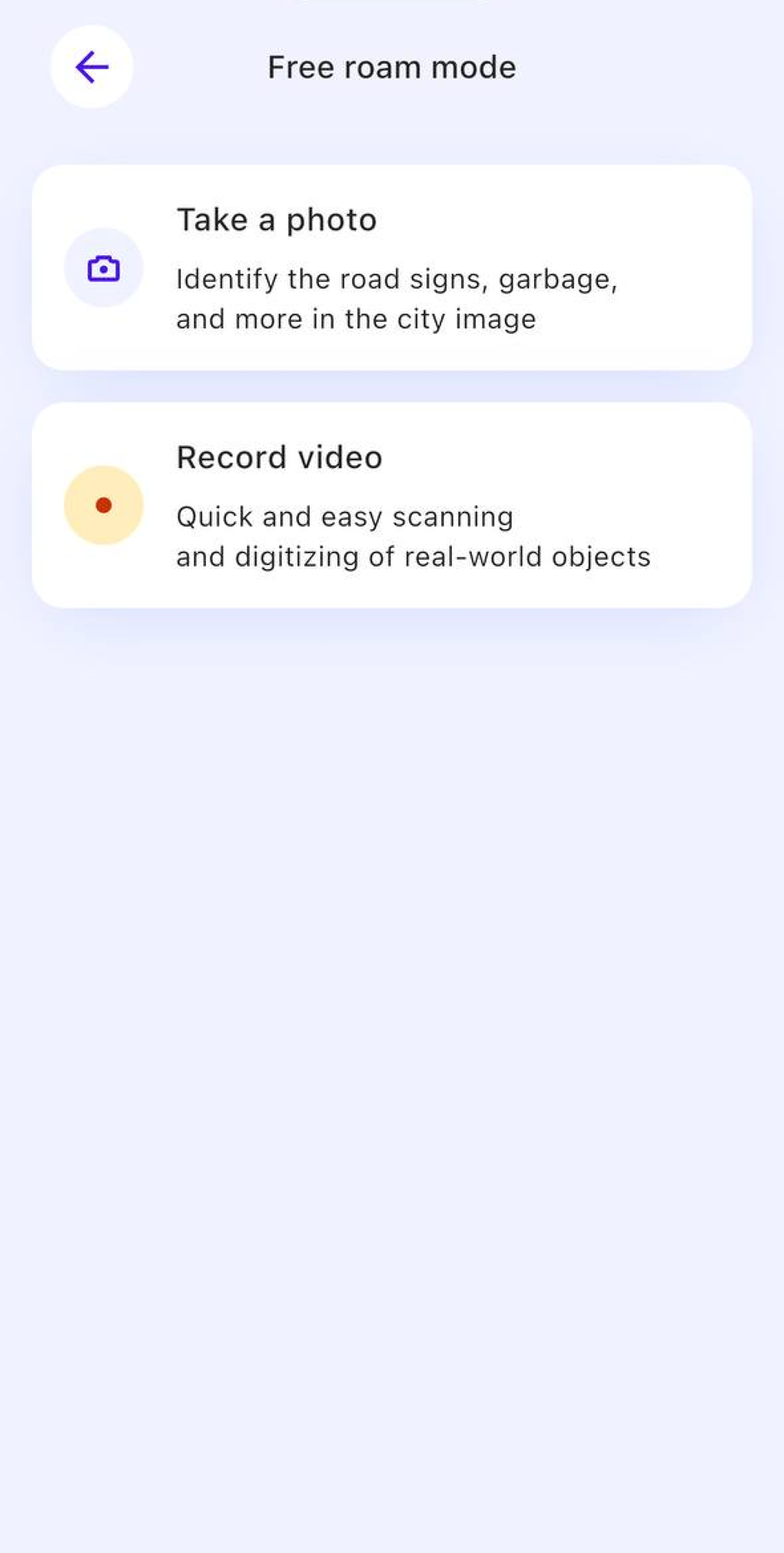
Choose a data recording method: taking photos or recording a video. The chosen recording method launches.
-
Place the mobile device horizontally.
Before you start recording, you can see current recording parameters and change them in general settings.
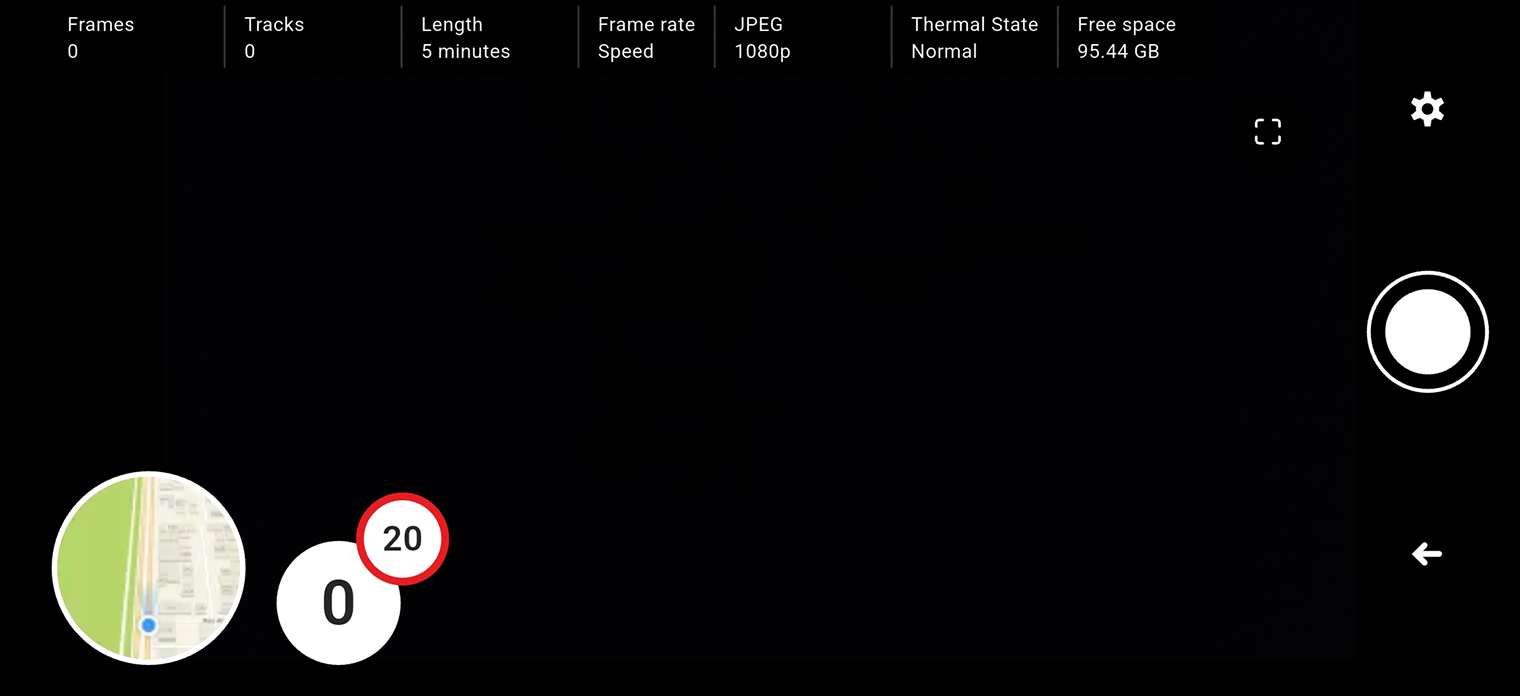
- Frames: number of frames (images bound to geographic coordinates) captured by the application and not yet uploaded for processing. When you record a video, frames are captured automatically depending on the configured frequency.
- Tracks: number of recorded and not yet uploaded tracks (time intervals and data collected during them).
- Length: duration of the current track in minutes. You can configure the maximum track length in settings.
- Frame rate: frequency of frame capturing. You can configure it to depend on speed, distance, or time intervals.
- JPEG: image resolution. You can select the level of image compression in settings.
- Thermal state: indicator of the processor heating state.
- Free space: available amount of device memory.
-
Tap the capture button to start recording.
Following the speed limitFollow the recommended speed limit to ensure high quality of captured frames.
-
To open the map, tap the round map icon in the lower-left corner.
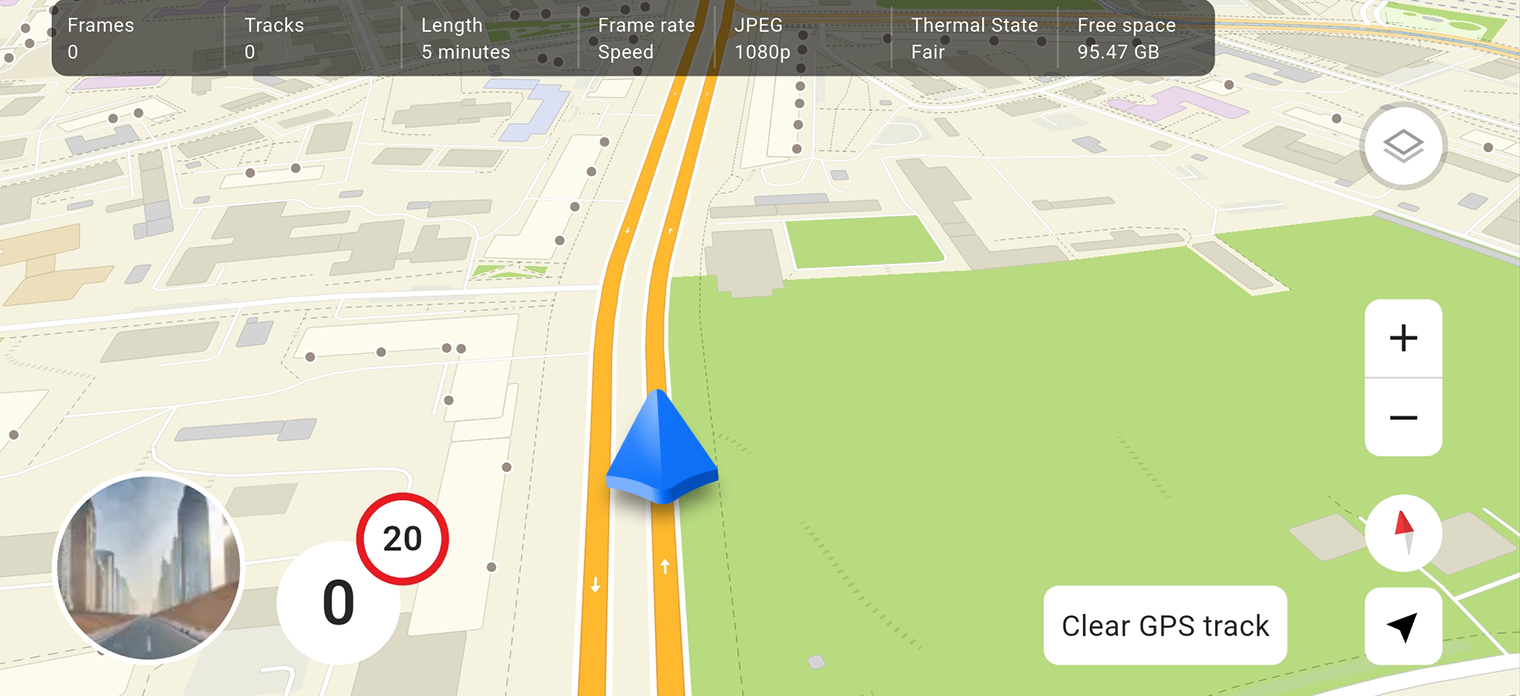
You can configure the map to make it more convenient for your work: select a theme, enable tracking the traveled route, and more.
-
To finish recording, return to the recording mode and tap the recording button again.
-
To return to the main menu, tap
 icon.
icon.Then you can restart recording or proceed with uploading recorded data.
Exporting tracks (Android devices)
If your mobile device runs out of memory before you finish recording, you can temporarily export recorded tracks to an external storage device:
-
Connect the storage device (a flash drive) to your mobile device.
-
Go to the Settings tab and open Track recording → Track management.
-
Tap Export.
Once the export is complete, device memory will be freed, and you can continue recording.
Task mode
If any tasks are assigned to you, they are displayed in the task list. You can sort and filter tasks by statuses, route length, expected task duration, and completion dates.
Recording data
Recorded data is stored locally. If necessary, you can temporarily export tracks to an external storage device during recording.
-
(Recommended) To avoid depending on network quality during driving and work on tasks without an internet connection, you can download them in advance. To download a task, tap
 icon in the task card. To download all tasks, tap Download in the upper-left corner of the screen. The downloaded tasks will be marked as Available offline.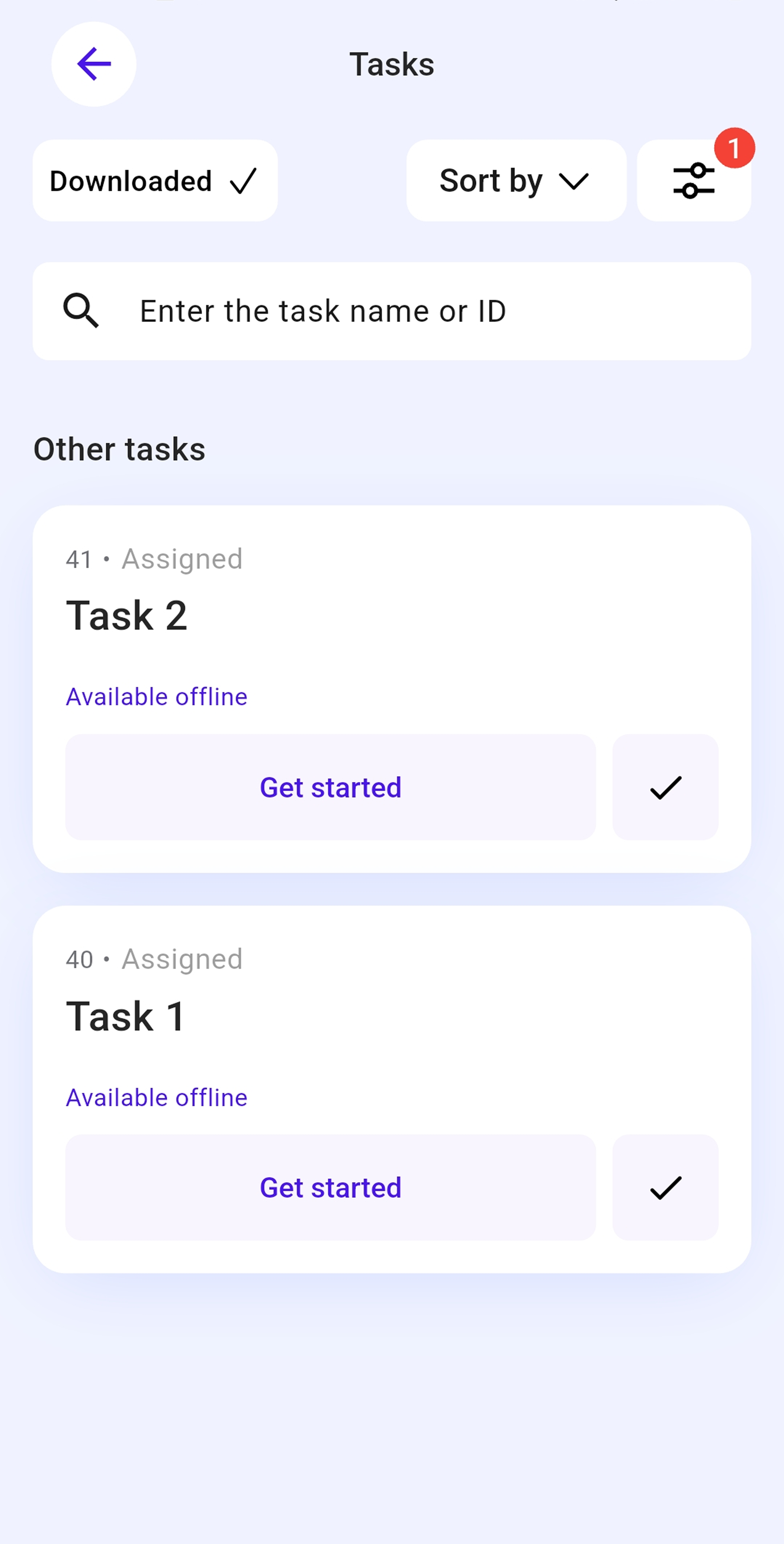
-
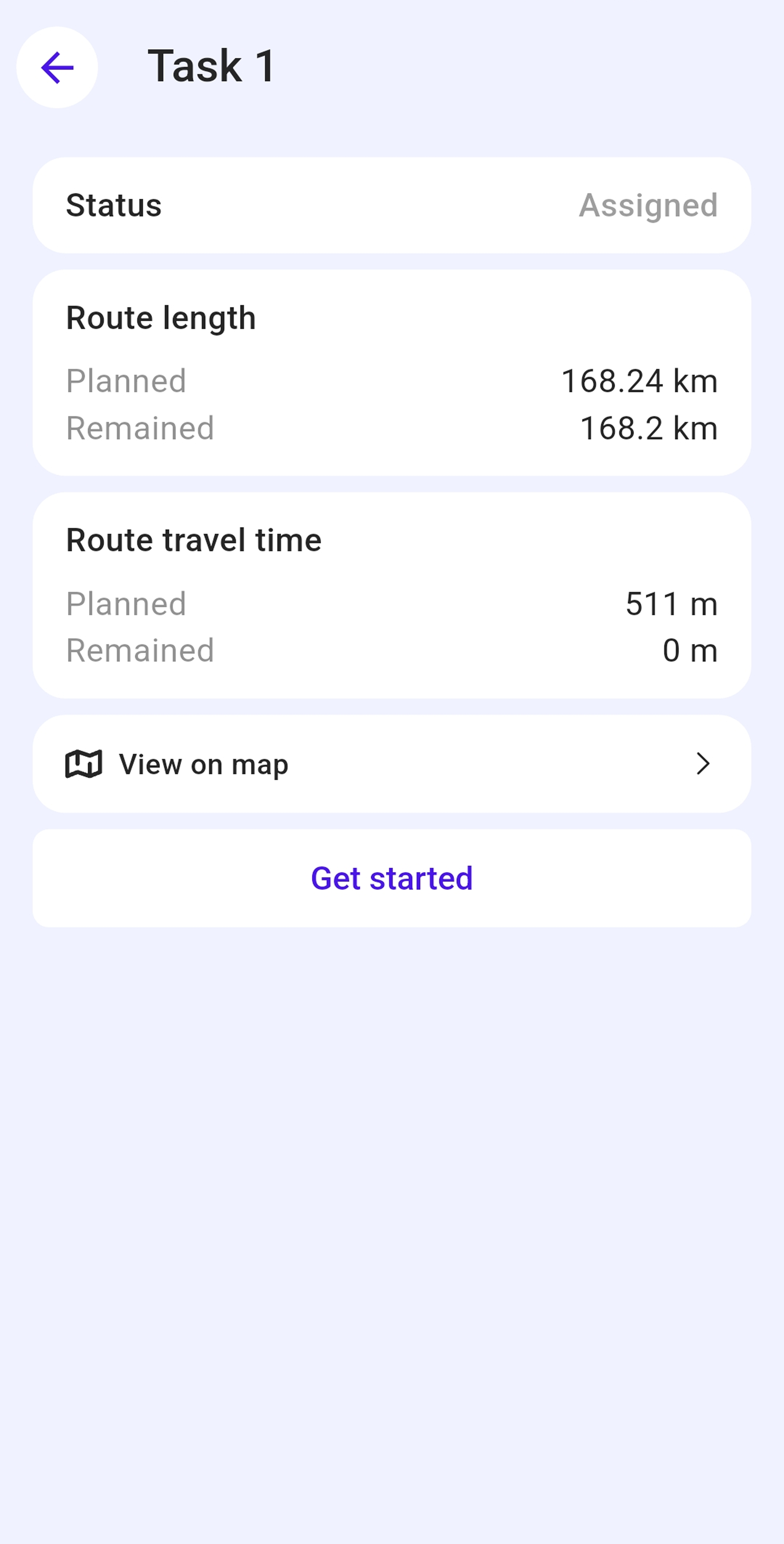
Select the task and tap Get started.
-
In the opened card, you can view the task status and statistics, and also see the full route on the map. Check the information and tap Get started. The video recording launches.
-
Place the mobile device horizontally.
Before you start recording, you can see current recording parameters and change them in general settings.
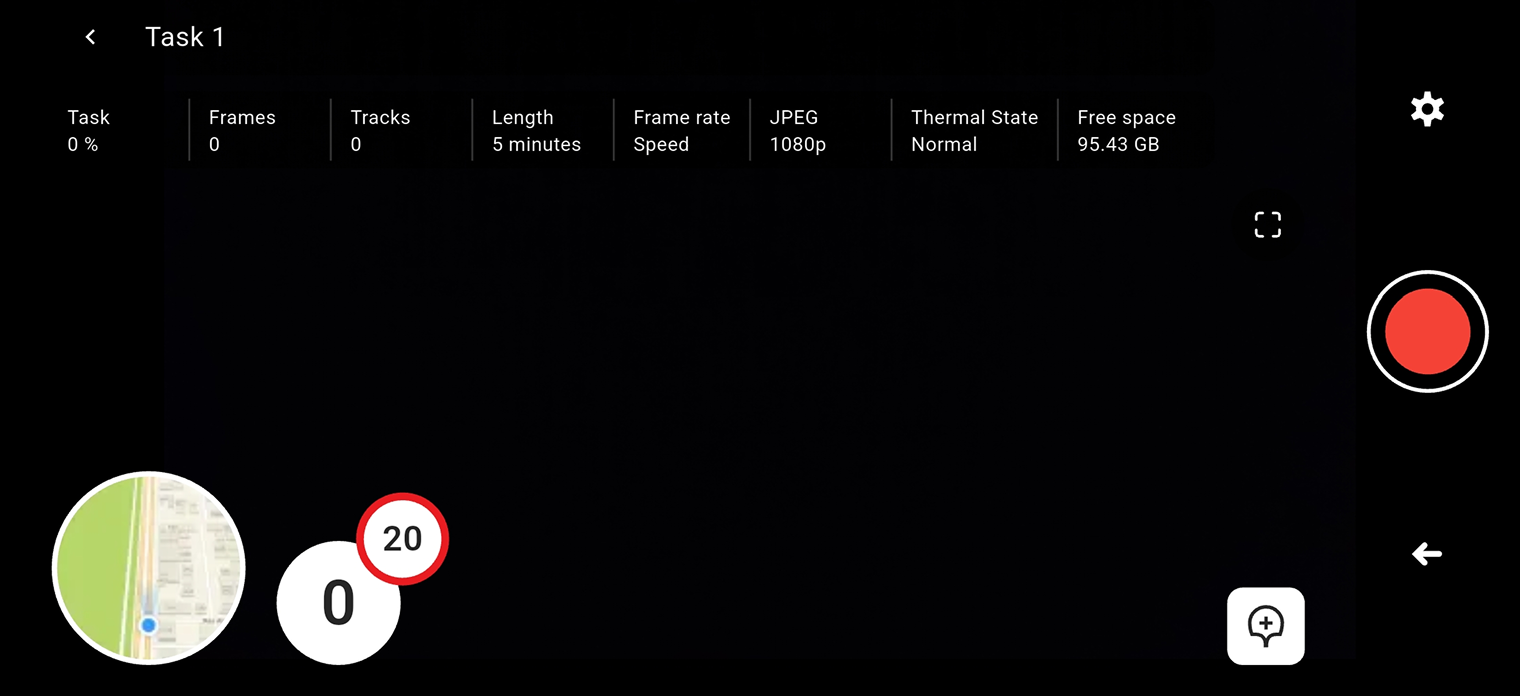
- Name: task name.
- Task: percentage of the current task completion.
- Frames: number of frames (images bound to geographic coordinates) captured by the application and not yet uploaded for processing. When you record a video, frames are captured automatically depending on the configured frequency.
- Tracks: number of recorded and not yet uploaded tracks (time intervals and data collected during them).
- Length: duration of the current track in minutes. You can configure the maximum track length in settings.
- Frame rate: frequency of frame capturing. You can configure it to depend on speed, distance, or time intervals.
- JPEG: image resolution. You can select the level of image compression in settings.
- Thermal state: indicator of the processor heating state.
- Free space: available amount of device memory.
-
Tap the capture button to start recording.
Following the speed limitFollow the recommended speed limit to ensure high quality of captured frames.
-
To open the map, tap the round map icon in the lower-left corner.
-
To enable task navigation mode, tap
 icon. Using the navigator is not required, but it guides you along the optimal route.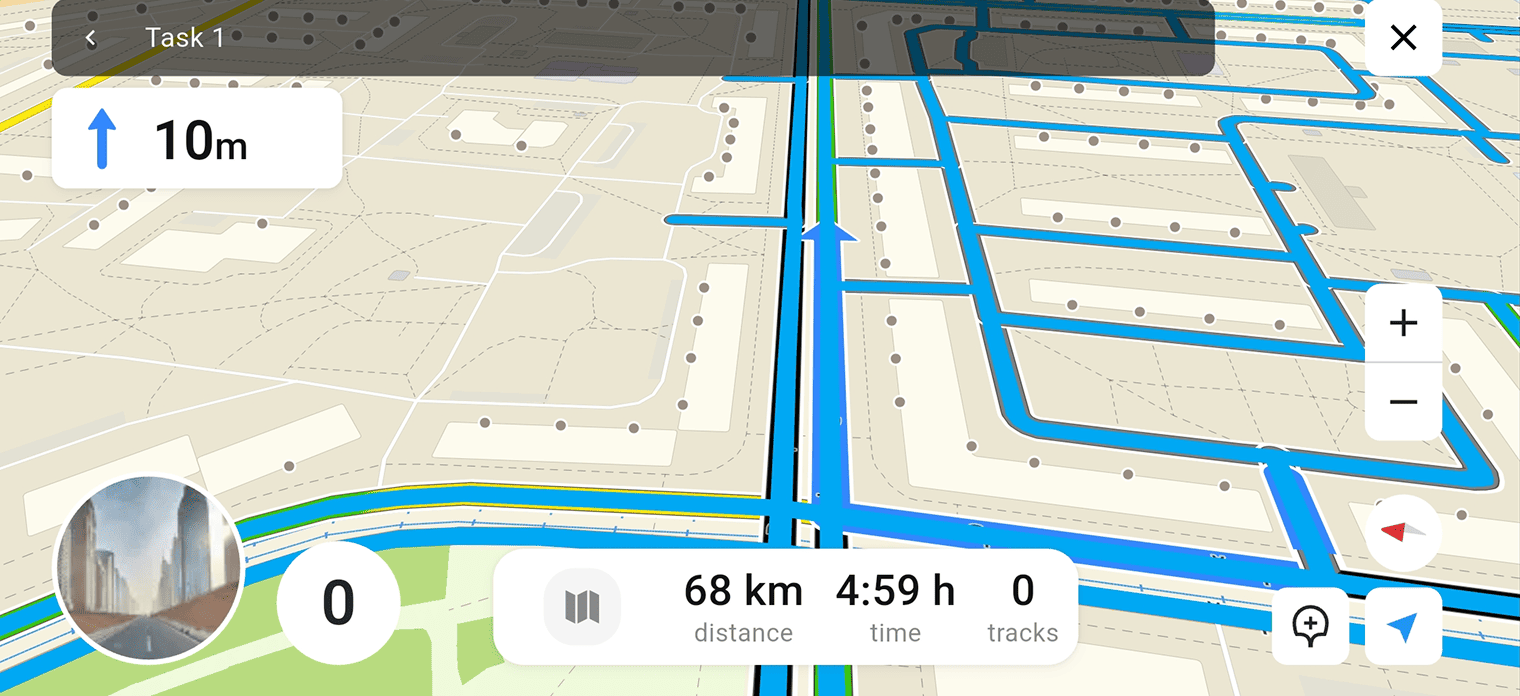
In task navigation mode, the route data is displayed at the bottom of the screen:
- route length
- expected route duration
- number of recorded tracks
To zoom out and see the full route, tap
 icon.
icon.To stop navigation, tap
 icon. You can resume navigation at any moment from any place on the map: the application will recalculate the route based on new conditions.
 -
To finish or suspend working on the task and return to the main menu, tap the task name in the upper part of the screen.
Then you can start recording again or proceed with uploading recorded data even if the task is not 100% completed.
Exporting tracks (Android devices)
If your mobile device runs out of memory before you finish recording, you can temporarily export recorded tracks to an external storage device:
-
Connect the storage device (a flash drive) to your mobile device.
-
Go to the Settings tab and open Track recording → Track management.
-
Tap Export.
Once the export is complete, device memory will be freed, and you can continue recording.
Reporting road events
During a task, you can report a road event (for example, an accident). The message will appear in the administrator tools and help with further analysis and task planning. The event marker will appear on the map at the location where you sent the message.
To report an event:
- Tap
 icon in the lower-right corner of the screen.
 - Enter your comment and tap Send.
2. Send the recorded data
-
Make sure your mobile device is connected to the internet.
-
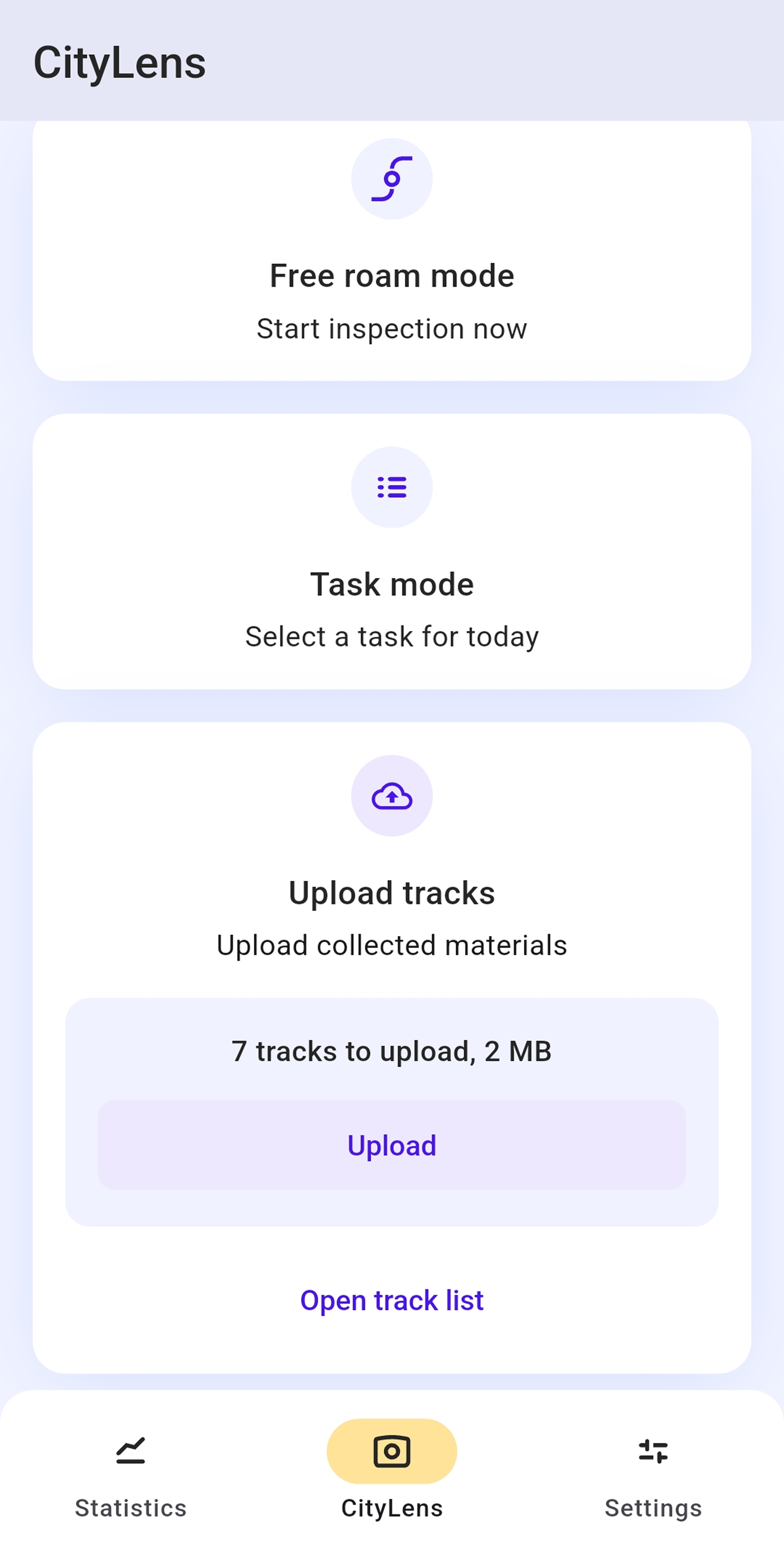
Go to the CityLens tab.
-
Upload tracks in one of the following ways:
- To upload all recorded tracks in chronological order, tap Upload. To pause the uploading, tap Stop. To resume uploading, tap Upload.
- To upload tracks separately, tap Open track list, select the track, and tap
 icon. The order of track uploading does not affect the correct display in the administrator tools.
-
(Android devices only) If you exported some tracks to external storage, import and upload them:
- Connect the storage device (flash drive) to your mobile device.
- Go to the Settings tab and open Track recording → Track management.
- Tap Import and wait for the process to complete.
- Go to the CityLens tab and select Upload.
If the uploading is interrupted, you will receive a notification and can manually restart the upload.
The uploaded data will be available for analysis in the administrator tools.
3. Check statistics
Once the data is uploaded, go to the Statistics tab to view the updated values on the total traveled distance and the number of captured and uploaded frames. The data is relevant for the current day only.
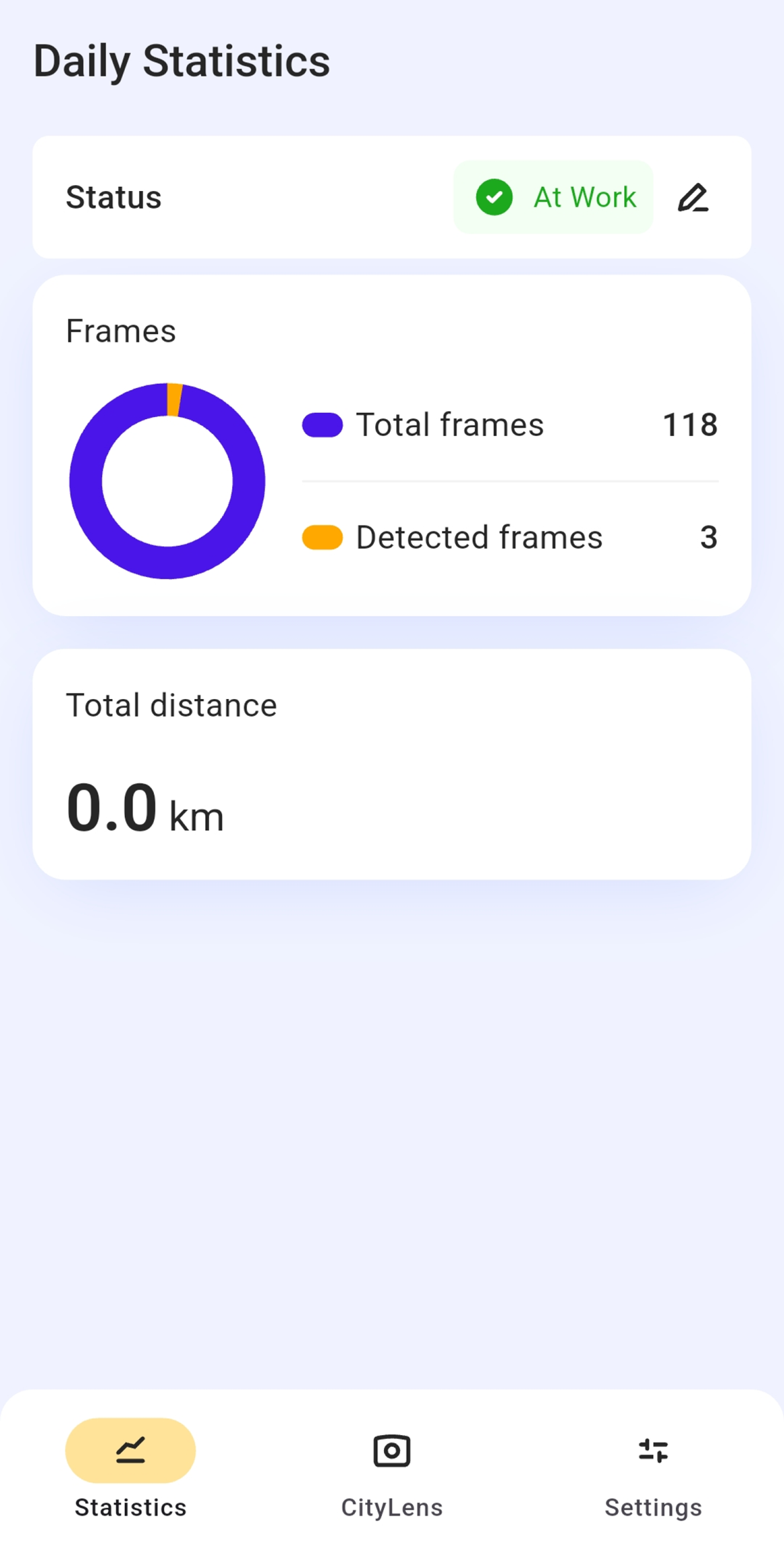
Once the frames are processed, the chart displays the number of detected objects.